This provocative and deeply researched talk examines a forgotten chapter in early Christian history — the disappearance of the Nazareans, a Jewish sect of early Jesus followers, and the emergence of what later became mainstream Christianity. Contrary to the familiar narrative that the earliest followers of Jesus simply evolved into the Christian Church, historical sources suggest a more complex process of marginalization, reinterpretation, and deliberate erasure.
Sh. Anwar Arafat traces the story of the Nazareans — who were distinct in identity, practice, and self-understanding from later Gentile Christianity — and explores how competing theological, social, and political forces in the first few centuries CE contributed to the consolidation of a dominant orthodoxy that ultimately silenced alternate Christianities.
America is deeply divided—politically, culturally, economically, and morally. Many voices today argue that a return to Christianity is the key to restoring America’s greatness. But is civilizational renewal really achievable through Christian identity alone? And what does history tell us about societies that attempt moral revival without deeper unity and purpose?
In this lecture, Sh. Fahad Tasleem builds on his earlier analysis, “Is America Falling Apart?”, by offering a comparative civilizational framework drawn from history, sociology, and Islamic thought. Rather than reducing America’s challenges to partisan talking points, the talk examines whether the United States is experiencing a familiar cycle of rise, dominance, and decline seen across past civilizations and if so, what to do about it.

In this insightful lecture, Dr. Nasser Karimian addresses what has been popularly framed in some Christian apologetic circles as “the Islamic dilemma” which argues that Islam must either accept the modern Bible as authoritative or concede that the Qur’an is mistaken for affirming it. Dr. Nasser Karimian shows that this argument is built on misunderstandings of Islamic theology and therefore represents a false dilemma rather than a genuine challenge.
Drawing on the Qur’an, classical Islamic scholarship, and textual history, Dr. Karimian deconstructs common misunderstandings about Islam and shows how these perceived dilemmas often arise from misinterpretations of Islamic teachings and scripture.The lecture explores why this argument continues to circulate in Christian apologetics and how a more accurate theological comparison between Islam and Christianity can move beyond polemics and towards an honest assessment of the veracity of each worldview.

In this in-depth lecture, Dr. Jonathan Brown examines the origins, assumptions, and broader implications of the Western historical-critical method — the dominant academic approach used to study ancient religious texts, including scripture and traditions. Rather than taking its neutrality for granted, he traces how this methodology emerged from specific intellectual and cultural developments in the West and how it shapes the way historians interpret religion today.
Dr. Brown explains that although historical criticism aims to understand the past objectively, it often carries implicit assumptions about skepticism, human nature, and the possibility of divine action. These assumptions influence how scholars evaluate religious traditions such as the hadith literature of Islam, the Bible, and other early texts. He unpacks why this method can be illuminating in some cases, yet limiting or biased when applied universally, especially across different religious frameworks.


Sh. Fahad Tasleem is a research fellow and instructor at The Sapience Institute. He is the author of the book, "No Doubt: Finding Certainty in an Age of Uncertainty". Fahad's research areas at Sapience focus on Islamic Theo-Philosophy & Spirituality.
He holds a BA in Economics from Michigan State University, an MSc in Business from the University of Southern California and Graduate Studies in Middle Eastern Studies with a focus on Islamic Theology from the University of Texas at Austin. Fahad is a student, researcher teacher of various Islamic sciences and is currently pursuing his Phd in Islamic Thought from the International Islamic University of Malaysia.

Sh. Anwar Arafat is an Imam for the Islamic Association of Greater Memphis. In Memphis since 2014, he moved here from Salt Lake City, UT, where he was born and raised, and served as an imam for several years. Arafat has traveled and lived overseas, completing his religious education locally and abroad, earning a bachelor’s degree in Islamic Studies, and most recently finishing a master’s degree in Islamic Leadership at the Islamic Seminary of America (TISA) in Dallas, Texas. He’s the U.S. Outreach Specialist for iERA, an international Dawah organization.

Dr. Nasser Karimian embraced Islam at the tender age of 14 and began a life of research and da’wah, being an active participant in local MSA events and lectures. He received his Bachelor of Arts of Degree from Concordia University with a Major in Religion and a Minor in Classical Arabic Language. He went on to earn a Master’s Degree in the History and Philosophy of Religion from the same university. He then continued his Islamic studies in Qalam Institute which is headed by Sheikh Abdul Nasir Jangda. In 2019, he completed his Ph.D. from the International Islamic University Of Malaysia (IIUM) in Usul al-Din and Comparative Religion. Dr. Nasser has travelled throughout the US, UK and Canada giving lectures on Islam to various Islamic youth groups and organizations. He joined Al Huda Foundation in 2020 as Imam, Resident Scholar and Youth Director.

Dr. Jonathan Andrew Cleveland Brown (born August 7, 1977) is an American scholar of Islamic studies. Since 2012, he has served as a professor at Georgetown University's Edmund A. Walsh School of Foreign Service. He holds the Alwaleed bin Talal Chair of Islamic Civilization at Georgetown University. Brown is an advisor to the Yaqeen Institute for Islamic Research, where he formerly served as Director of Research.
Brown was born in Washington, DC. He was raised as an Episcopalian. In 1997 while he was in college, prior to his 20th birthday, he converted to Islam. Brown is Sunni and follows the Hanbali school of Islamic jurisprudence.
Brown graduated magna cum laude with a Bachelor of Arts in History in 2000 from Georgetown University in Washington, D.C., studied Arabic for a year at the Center for Arabic Study Abroad at the American University of Cairo, and completed his doctorate in Islamic thought at the University of Chicago in 2006.
The "Christianity Through an Islamic Lens" conference is a one-day academic event organized by Sapience Institute, designed to equip Muslims with the knowledge and tools to engage in meaningful and academic discussions with Christians. The event focuses on exploring Christianity from an Islamic perspective, covering various historical, theological, and contemporary topics.
This conference is ideal for Muslims interested in understanding Christianity more deeply, whether for personal knowledge or to engage with Christian co-workers, friends, and neighbors. It's particularly useful for those involved in dawah, interfaith dialogue, or anyone who wants to make an eloquent and academic case for the Islamic worldview.
The conference will be held on Saturday, February 7th, 2026, at Georgia State University, Atlanta, Georgia.
The conference features a variety of sessions that explore different aspects of Christian theology and history from an Islamic perspective. Topics include: The Prophet Muhammad’s ﷺ dawah to Christians Christian views on sex, sin, and salvation versus Islamic perspectives The historical development of the Trinity before and after Nicaea The influence of Christian Zionism on modern political dynamics An examination of Mormonism and its missionary efforts The role of Paul in shaping modern Christianity and its divergence from the teachings of Jesus (as)
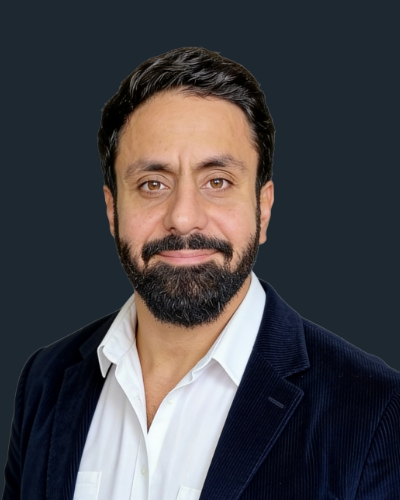
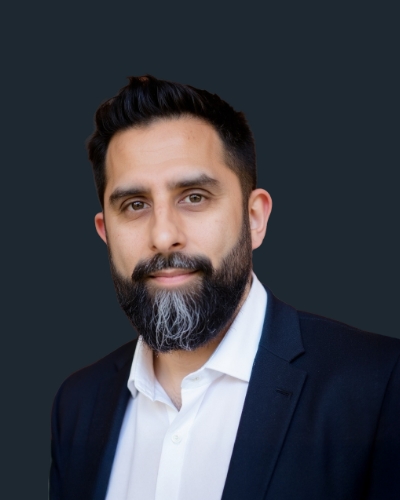
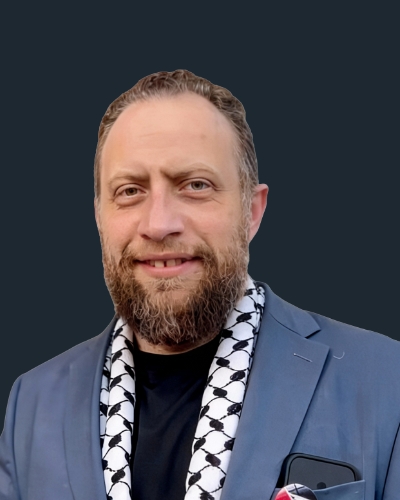
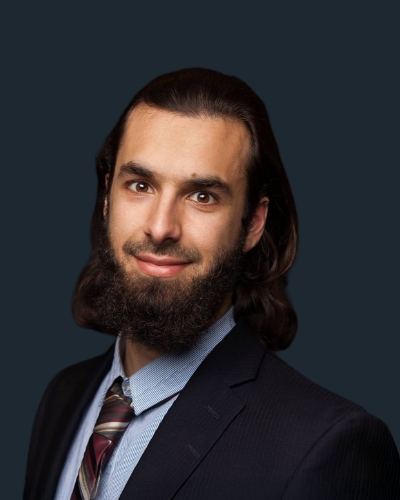
The event features distinguished speakers with expertise in Islamic and Christian theology, including: Sh. Fahad Tasleem, Sh. Anwar Arafat, Dr. Nasser Karimian, and Dr. Jonathan A. C. Brown.
This conference addresses the need for Muslims to engage with Christians—who make up a large portion of society—in an informed, kind, and intellectual manner. Given the significant role Christians play in shaping societal views and policies, understanding their beliefs is crucial. The sessions aim to empower attendees with knowledge to communicate the Islamic worldview effectively and respectfully.
Yes, the conference is structured to benefit individuals at all levels, from beginners to those with advanced knowledge of Christian and Islamic theology. The sessions will offer both foundational insights and in-depth academic discussions.
Yes, the conference includes sessions that address contemporary ideological issues, such as the rise of the LGBTQ+ movement and its challenges to Christian and Islamic values, as well as the political influence of Christian Zionism on Muslim communities.
Unfortunately, tickets are non-refundable. However, since we are a non-profit organization, all funds collected are used to support the work of Sapience Institute which is committed to developing, supporting and empowering individuals and organizations to intellectually share and defend Islam. If you have any issues with your order, you can email events@sapienceinstitute.org